Generative AI for Automated Vehicle Exterior Structural Design
Generative AI that turns a styling surface into a manufacturable interior structure, cutting exterior structural design lead time from weeks to minutes
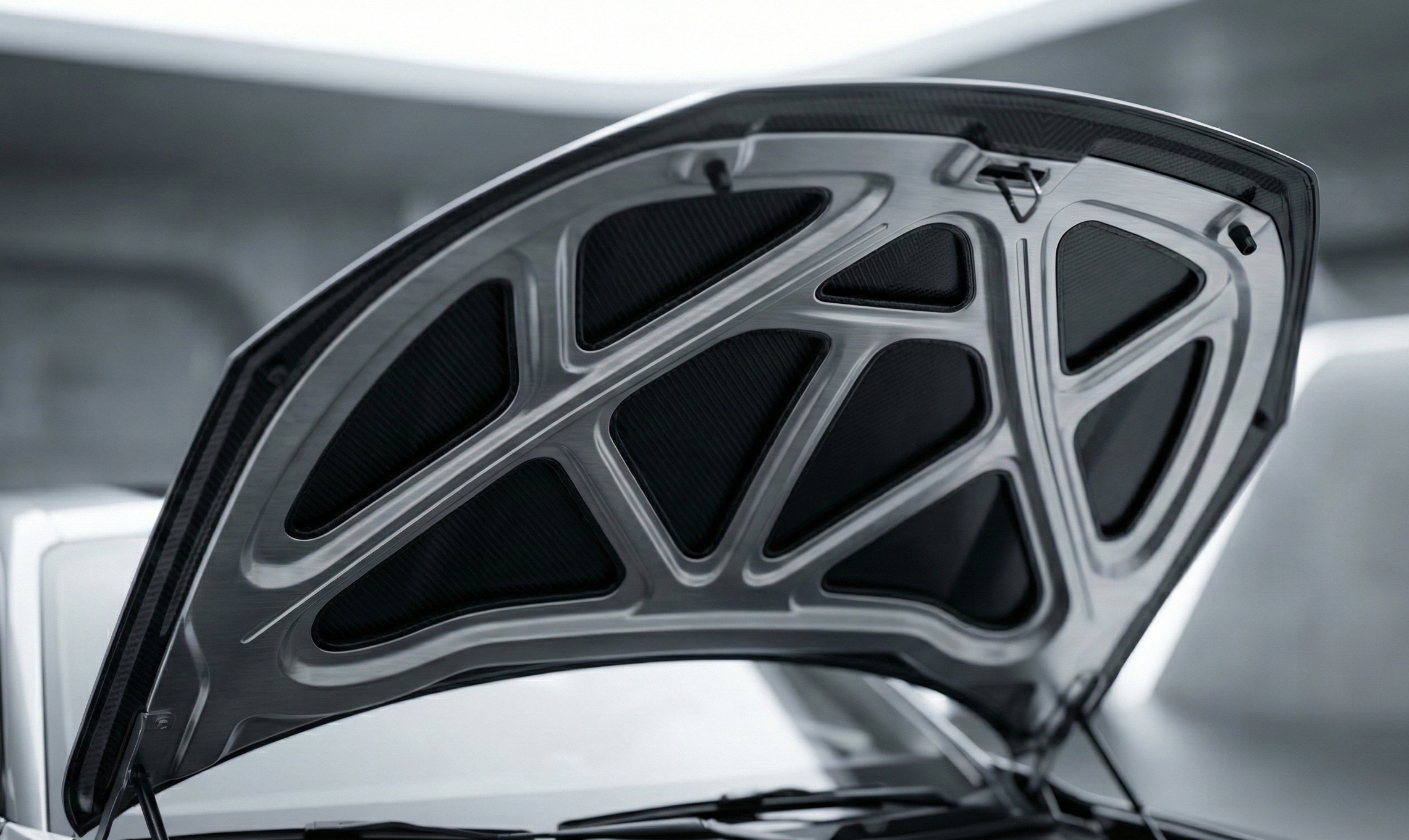
Project Overview
Developed a generative AI pipeline that automates the design of internal structural parts behind a vehicle’s exterior styling surface. Given a stylist-defined outer surface, the system produces engineering-constraint-compliant 3D internal structures that are ready to hand off to downstream CAE analysis — collapsing a workflow that previously took weeks into minutes.
My Role
AI Researcher, Narnia Labs
- Individual contributor on the surface (sheet) generation model that turns the stylist’s outer surface into a valid internal structure
- Contributed to encoding engineering constraints as learned priors so generated candidates are verification-ready
The Challenge
Traditional vehicle exterior structural design is manual, iterative, and constraint-heavy:
- Slow manual CAD modeling: The existing workflow depends heavily on engineer-driven CAD modeling, which takes substantial time from initial concept to verification.
- Costly rework on analysis failure: When CAE results miss a target, the engineer restarts from modeling — an expensive re-loop that stretches the overall lead time.
- Limited alternatives explored: The cost and time of iterating design + analysis restrict how many alternative concepts the team can realistically evaluate.
Technical Approach
Automated the styling-to-structure pipeline with a constraint-aware generative model:
- Styling-surface conditioned generation: The model takes the designer’s styling surface as input and outputs an optimal 3D internal structure that complies with the required engineering constraints.
- Engineering constraints as learned priors: Core manufacturability and performance constraints for series production are baked into the model, so generated candidates are verification-ready at inference time.
- Design-analysis-friendly output: Generated structures are produced in a form that flows naturally into downstream CAE and edit tools, minimizing rework.
Impact
- Weeks → minutes: The lead time for exterior structural design drops from weeks of manual work to minutes of AI-assisted generation.
- Shift to decision-focused workflow: Engineers move from “modeling operator” to “selecting the best AI-proposed alternative”, concentrating on higher-value design decisions.
- More alternatives, higher quality: Many design candidates can be compared side-by-side within a short window, raising both design completeness and product competitiveness.
Client: Global automotive OEM (undisclosed) Organization: Narnia Labs Category: Automobile
Source: Narnia Labs Case Study #46