AI-Driven Design Automation and Vibration Prediction for Test JIGs
Deep-learning framework that generates JIG assemblies and predicts vibration performance for product testing setups
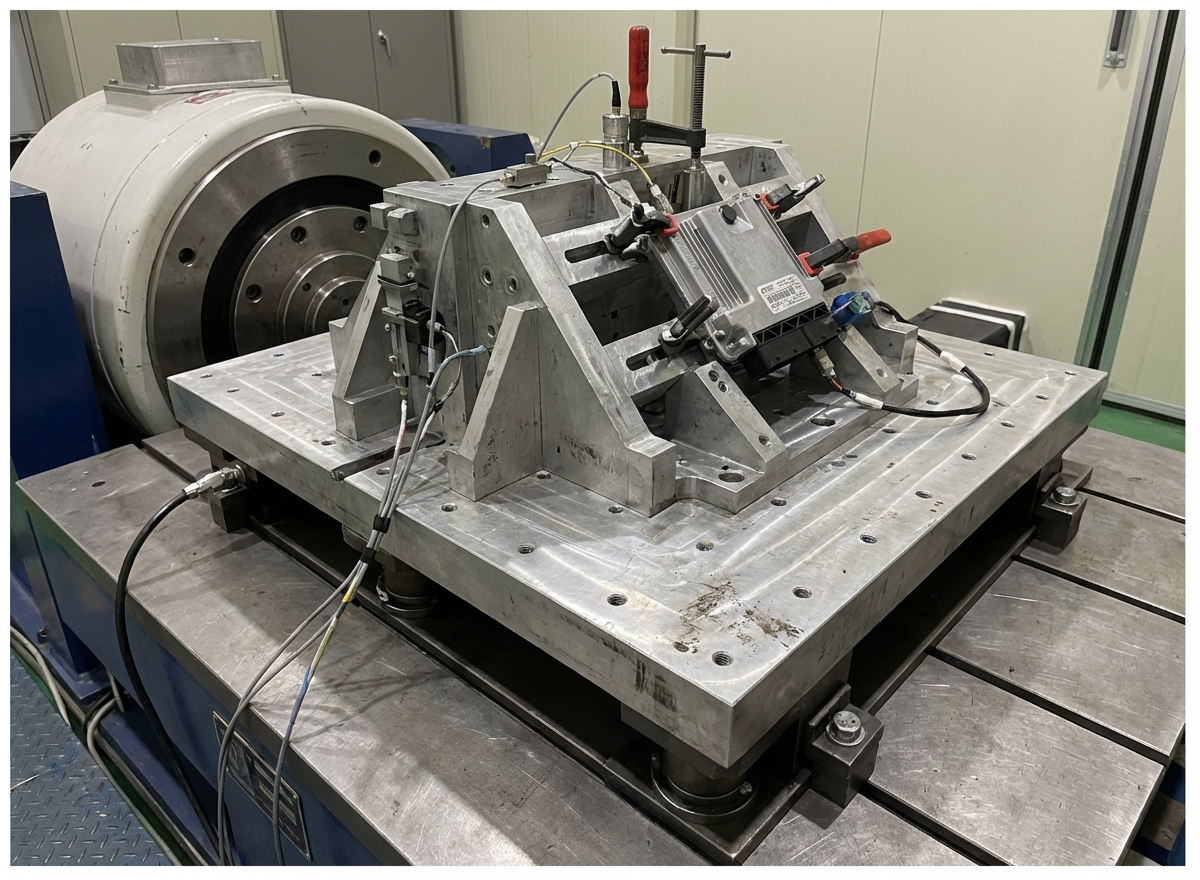
Project Overview
Developed a deep-learning framework that automates the design of vibration-test JIGs (fixtures used for product vibration testing). A generative model proposes JIG geometries under mounting and space constraints, and a predictive model evaluates their vibration performance directly — replacing the expert-driven, largely manual design loop.
My Role
AI Researcher, Narnia Labs
- Individual contributor on the hands-on implementation of the assembly-generation and vibration-prediction models
- Contributed to integrating the models into the design-engineer-facing software platform
The Challenge
Traditional JIG design leans heavily on specialist experience and manual iteration:
- Slow arrival at an optimal shape: Deriving a JIG geometry that satisfies the required vibration behavior for a given product takes significant time.
- Poor reuse of prior analyses: Existing CAE results are hard to reuse effectively, so similar design work is repeatedly redone.
- Excessive manual design effort: Reliance on the engineer’s intuition and hand-modeling wastes overall engineering resources.
Technical Approach
Delivered a unified generative + predictive AI pipeline for JIG design:
- Condition-driven shape generation: A generative AI trained on prior CAE data proposes per-component JIG geometries that respect mounting conditions and space constraints.
- Vibration-performance predictor: A predictive model estimates the vibration response of a newly generated JIG assembly on the fly, without a full CAE run.
- Dedicated design platform: The models are integrated into a single software platform so that design engineers can use them directly, without stepping through separate tools.
Impact
- Sharp reduction in design man-hours: AI-assisted shape proposal replaces most of the manual iteration, saving engineering time and effort.
- Faster vibration-testing setup: Reliable performance prediction cuts the preparation time required before running the actual vibration test.
- Validated assembly-generation capability: Successfully demonstrated a rarely commercialized capability — multi-part assembly generation via AI — reinforcing the foundation of AI-driven engineering design automation.
Client: Electronics manufacturer (undisclosed) Organization: Narnia Labs Category: Others
Source: Narnia Labs Case Study #50