Generative Design of Brake Calipers with 3D Deep Learning
3D deep-learning generative design for automotive brake calipers with structural performance prediction and optimization
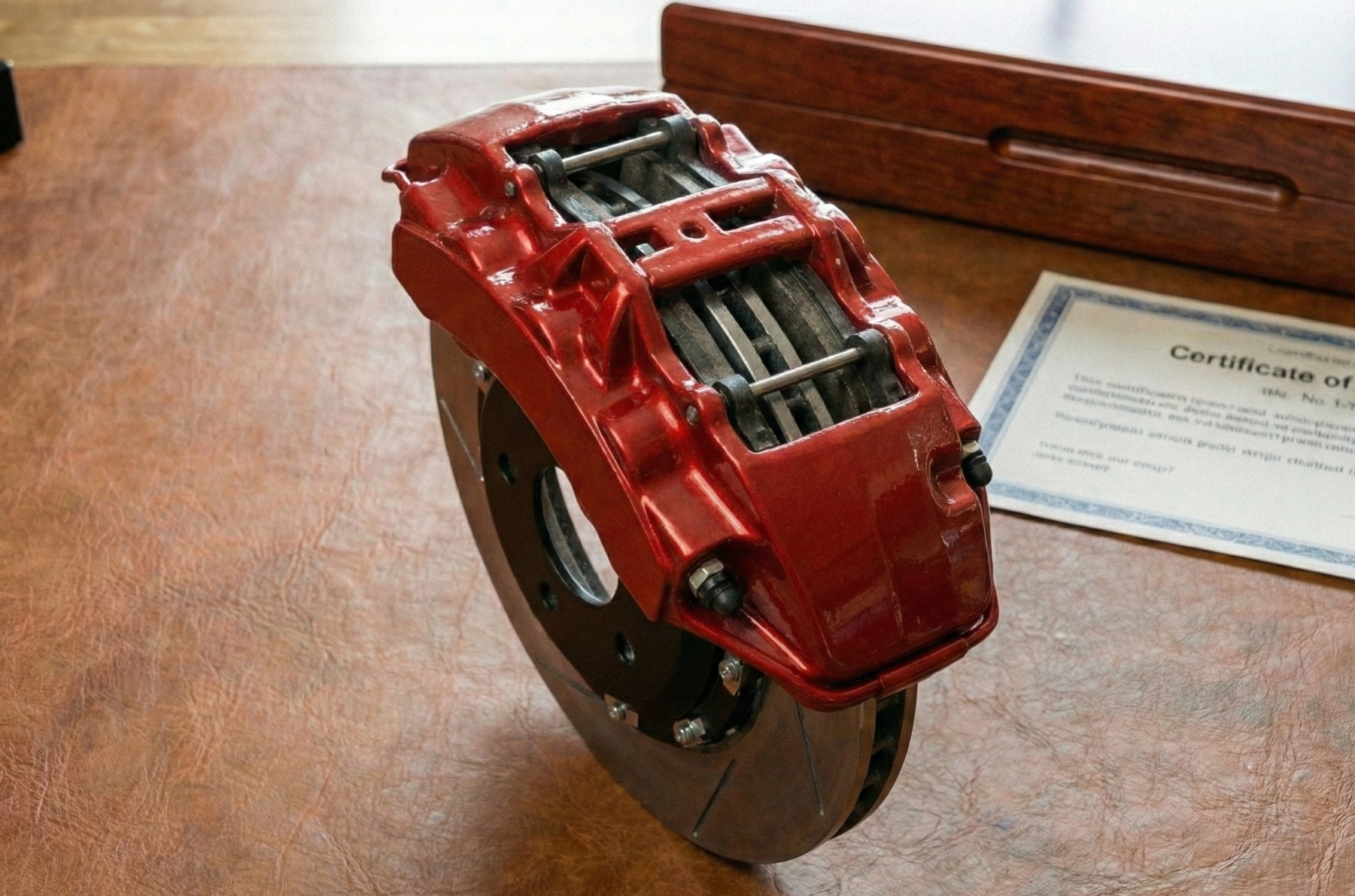
Project Overview
Developed a 3D deep-learning framework for the design of automotive brake calipers. The system proposes thousands of candidate geometries, predicts their structural performance on the fly, and optimizes for a target trade-off between strength and weight — enabling design exploration well beyond the historical repertoire of human engineers.
My Role
Project Manager, Narnia Labs
- Led problem definition and scoping in collaboration with the client team
- Owned client-facing communication and delivery milestones throughout the engagement
- Drove hands-on technical work on the 3D deep-learning generative-design framework integrating a generator, evaluator, and optimizer
The Challenge
Existing brake-caliper design relies on repeated manual CAD + physical / CAE test cycles:
- Repetitive design–test loop: Reaching a design that goes beyond historical templates typically requires many rounds of test, hurting both cost and lead time.
- Manual-process resource waste: Engineers hand-design a candidate, then run structural analyses and physical tests until requirements are met — a highly iterative and expensive workflow.
Technical Approach
Built an integrated AI framework combining generation, evaluation, and optimization:
- AI-based design assistant: A 3D deep-learning model trained on existing designs and the underlying physics can propose tens of thousands of caliper designs and immediately estimate their performance.
- Generator + Evaluator loop: Rather than only drawing candidate shapes, the system actively generates new designs and pre-evaluates their structural response, closing the automation loop.
- Optimizer: A dedicated optimization stage searches for shapes that simultaneously maximize stiffness and minimize weight — targets that the human designer struggles to balance manually.
Impact
- High-stiffness, lightweight caliper designs: Structural performance is preserved (or improved) while weight is reduced, cutting development cost at the same time.
- Creative, non-standard geometries: The AI proposes topologies that a human engineer would rarely intuit, expanding the reachable design space.
- Faster, cheaper development: Structurally sound, novel caliper designs are delivered significantly faster and at lower cost than the traditional manual workflow.
Client: Automotive parts manufacturer (undisclosed) Organization: Narnia Labs Category: Automobile
Source: Narnia Labs Case Study #59