Generative AI for Automated 3D CAD Design of Automotive Part Covers
Generative AI that produces manufacturable 3D CAD and drawings of automotive rear-covers from minimal input
Project Overview
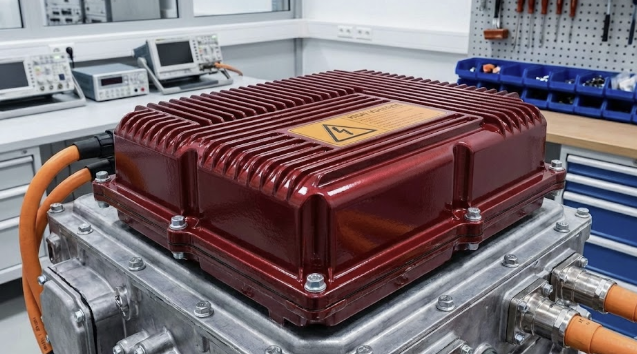
Developed an AI system that automates the 3D design of automotive part covers (rear-covers). Given a small set of basic conditions from the user, the system generates 3D CAD models and 2D drawings that follow the company’s internal design rules, without requiring expensive commercial CAD software or a highly experienced designer.
My Role
Project Manager, Narnia Labs
- Led problem definition and scoping in collaboration with the client team
- Owned client-facing communication and delivery milestones throughout the engagement
- Drove hands-on technical work on the rule-encoded generative AI pipeline that produces CAD models and drawings end-to-end
The Challenge
Designing part covers has traditionally been a slow, tool-heavy, engineer-dependent process:
- Long design lead time: Manually designing a single part cover takes about 5 days of engineer time.
- Heavy software dependency: Expensive commercial CAD licenses and trained specialists are required to operate them.
- Inconsistent quality: Output quality varies significantly with the individual engineer’s skill and experience.
Technical Approach
Encoded the domain’s design rules and geometric constraints into a system that can generate parts end-to-end:
- Rule standardization: Standardized the tacit design rules — rib positions, screw-hole patterns, wall thickness policies — and embedded them into the system.
- Independence from commercial CAD tools: The generation pipeline runs without a paid CAD/CAE stack, making it accessible to non-specialist users.
- One-click 3D + drawing: Given only a minimum set of user inputs, the system produces both a 3D CAD model and a 2D drawing automatically.
Impact
- 5 days → 1 hour: Design lead time for a single rear-cover shrank from about 5 days to roughly 1 hour, dramatically accelerating overall product development.
- Expert-level output from novice users: Because the design rules are enforced by the system, even non-experts produce results at the quality level of an experienced engineer.
- Lower operating cost, higher-value work: Eliminates recurring commercial-CAD license spend and frees engineers to focus on higher-value design decisions rather than repetitive modeling.
Client: Automotive OEM (undisclosed) Organization: Narnia Labs Category: Automobile
Source: Narnia Labs Case Study #62