AI-Based Real-Time Aerodynamic Prediction for 2-Channel Electric Air Vents
Physics-constrained predictive AI that replaces CFD simulation for real-time airflow evaluation of automotive air vents
Project Overview
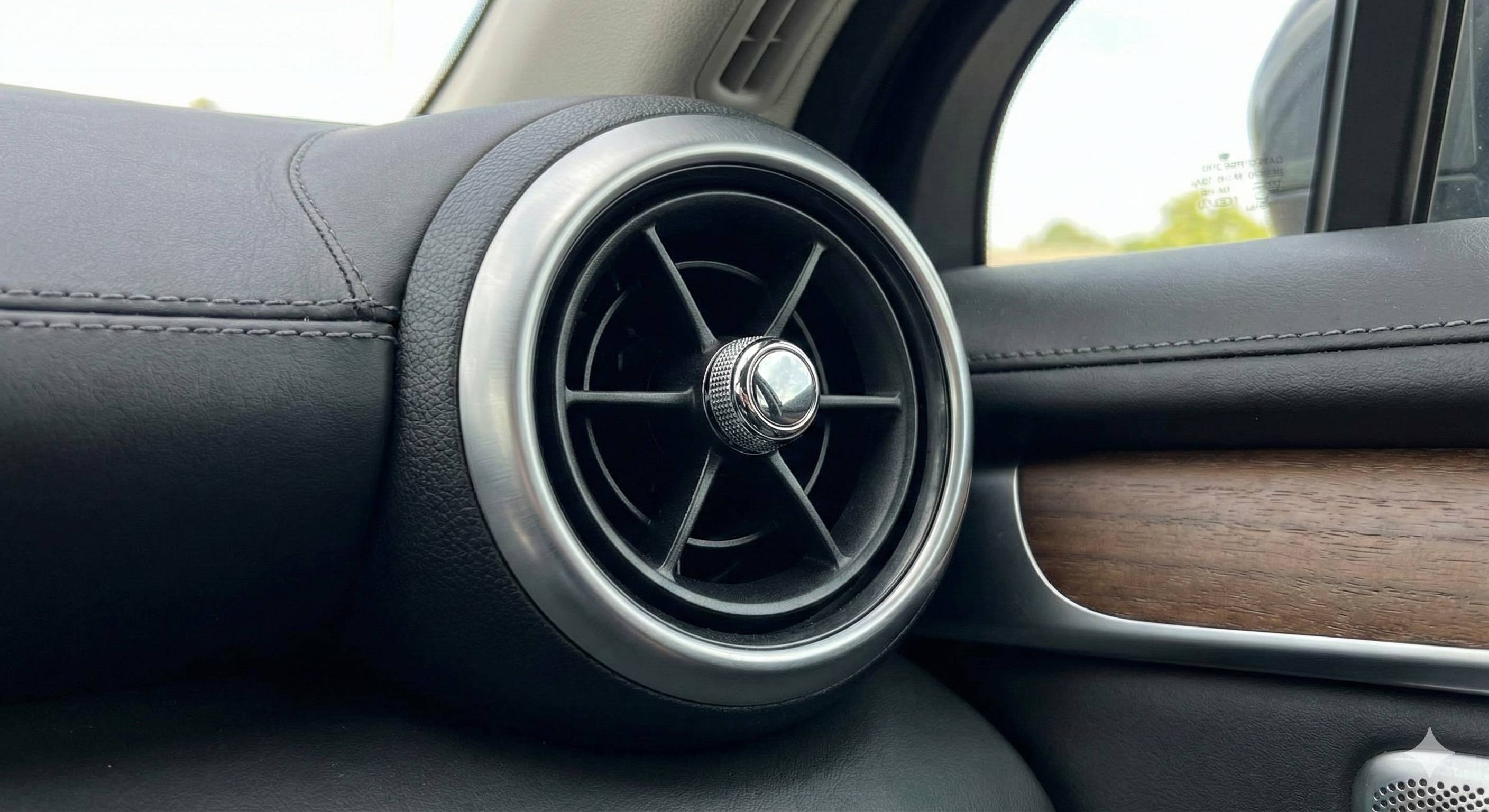
Developed a predictive AI framework that replaces computational fluid dynamics (CFD) simulation for evaluating 2-channel electric air vents used in vehicle cabin air-conditioning. The system returns airflow speed and direction distributions in real time from a candidate geometry, enabling designers to evaluate and iterate concepts without going through a full CFD analysis cycle.
My Role
Project Manager, Narnia Labs
- Led problem definition and scoping in collaboration with the client team
- Owned client-facing communication and delivery milestones throughout the engagement
- Drove hands-on technical work on the physics-constrained predictive AI framework for real-time airflow and direction estimation
The Challenge
Verifying the performance of a new air-vent geometry traditionally requires running heavy CFD simulations for every candidate design:
- Expert-dependent long turnaround: CFD requires significant expert time and compute, inflating design cycle time and cost.
- Bottleneck for design exploration: Because each variant must go through a full simulation, designers cannot rapidly compare a large number of alternatives.
Technical Approach
Built a physics-aware predictive AI that supplies airflow and direction estimates in place of CFD:
- Physics-constrained learning: Beyond fitting reference data, the training loss enforces physical constraints such as the incompressible continuity equation, so the model is aware of the governing physics — not just the numbers.
- Aerodynamic reasoning: The model learns aerodynamic principles from data, producing high-fidelity, physically consistent predictions rather than purely data-fit outputs.
Impact
- Real-time airflow prediction: Airflow speed and direction distributions are estimated instantly for any vent geometry, without invoking CFD.
- Designer self-evaluation: Engineers can judge whether their concept meets requirements on their own, without submitting an analysis request to a CFD expert.
- Rapid data-driven exploration: The most performant designs can be filtered from a large candidate pool in a fraction of the time previously required.
Client: Automotive parts manufacturer (undisclosed) Organization: Narnia Labs Category: Automobile
Source: Narnia Labs Case Study #65